Call me goofy … But I must say that planting my landscape beds is one of my favorite creative and physical outlets. I enjoy choosing the plants and deciding where to put them. After sweating in the sun and covering my hands and knees in messy, black dirt, there is a visible reward for my efforts. My house looks inviting and cheerful, and I love driving up to my front porch after I’ve finished. (What can I say? My mother made me this way. Gardening has always been a must for her!)
It was one of those gardening days when my son planted himself on the front steps and needed his mother’s attention. Again. It was day three of the Pester-Mom-Athon. He wanted to make plans with a friend that required a plane ticket, missing more days of school, and an actual invitation from said person to go. In other words, he wanted me to make this trip happen for him even though I wasn’t the person who was in charge of the plans. He was very bothered and would not let it go.
I told him that he could no longer ask me about something I had no control over. Needless to say, I’d heard enough about this “problem” and was not thrilled with the interruption. And that’s when I looked at his face—his troubled, struggling-for-words face. His head was in his hands, and he was grimacing as he tried to gain control of his emotions.
“I … Umm … I …” he couldn’t get the words out.
“Take your time, buddy. It’s okay, I’ll wait,” I told him.
Finally, he squeaks out, “I’m talking to you about this, Mom, because you let me ask all my questions and finish talking without getting angry.”
There it is. The weight of it. The heaviness that has been sitting in his chest. It was just too much. His unending flood of words for the last few days was his way of leaking out what he could not carry, what he should not carry.
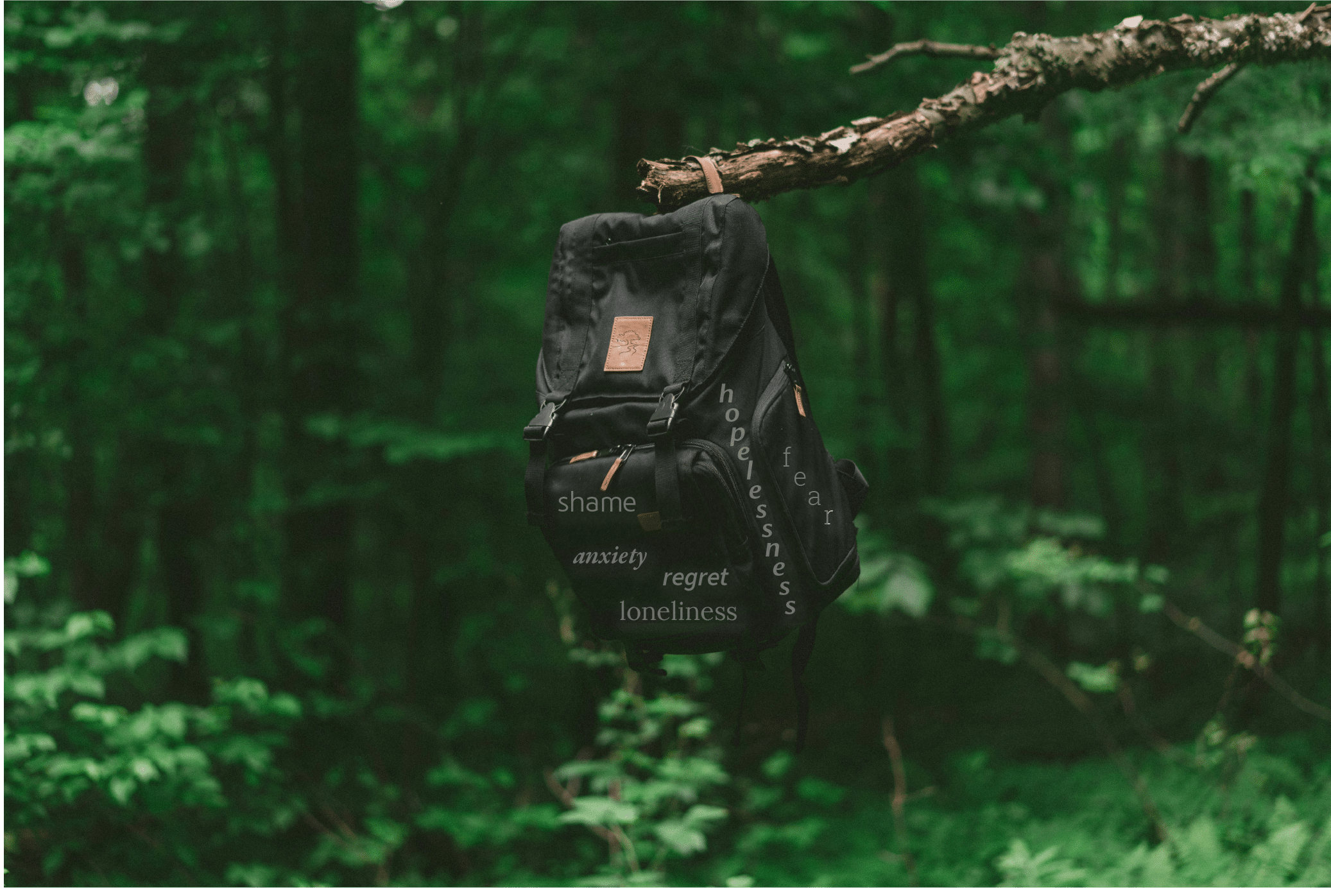
That’s when I started talking to him about his backpack. I explained it like this …
Imagine every person in the world carries around a backpack. Inside the backpacks, we’re all carrying our experiences and our feelings. Ideally, a kid’s backpack is smaller and lighter because they’ve had fewer experiences and worries to tote around. A grown-up’s backpack is bigger and heavier because they’ve experienced more things, heavier things.
When you’ve experienced things like bullying, divorce, chronic illness, or abuse as a child, your backpack is heavier and harder to carry than it might be for a lot of your friends who haven’t had to walk through quite so many hard things. Sometimes, kiddos with heavier backpacks are wise beyond their years, sometimes they’re extra sensitive, and sometimes, they are more closed off.
Adults around us might be carrying a backpack with big, jagged rocks, shards of glass, or barbed wire sticking out. When they rub up against you, you can pretty much expect to be affected by their messy, out-of-control load. These unhealed adults do not manage their own packs or have eyes to clearly see them, so they hurt the people who get close to them.
A mentally and emotionally healthy adult is aware of what they carry in their backpack. They take the time to look at it and unload things they should no longer carry. They intentionally take steps to heal from their painful experiences. And they become healthy enough to manage their own backpack.
On the flipside, an adult who isn’t managing her emotional backpack may try to remove it and hoist it onto the shoulders of her children. The child is often so accustomed to wearing his parent’s backpack that he knows he’s expected to wear it.
How is a child supposed to manage his backpack and an adult’s backpack while growing and maturing?
Children are designed to carry a load that coincides with their age and maturity. Children cannot and should not carry the burdens of an adult. When life gives them more than they can carry, kiddos need a safe space to unload the weight. And when those burdens are messier and more complex, that safe space requires expertise to help that child find the words and the means to heal.
Our children need to be empowered with tools and knowledge that help them to not only look at their own emotional backpacks but also to differentiate their own backpack from someone else’s. In other words, kids need the freedom and space to manage their lives and to know when they’re being asked to carry someone else’s load.
As a believer, I went on to explain to my son that the adults around him might be carrying harmful burdens, but that doesn’t mean he has to take the backpacks that people try to put on his shoulders. And that even when he is alone or afraid to speak up, he can put those burdens in the hands of Jesus without uttering a word. He can silently call on the Lord to help him and take the load he isn’t meant to carry.
“Cast your cares on the LORD and he will sustain you; he will never let the righteous be shaken.”(Psalm 55:22 NIV)
Pay attention to the burden your children are carrying. And pay attention to the burdens you’re carrying so that you don’t inadvertently harm your child with a load not meant for them. They may not have the words to describe the way it feels, or they may not even know that they’re carrying a load that is far too heavy for their shoulders.
Your kiddo may need help unpacking a burden that’s been hanging on his back. It may be time for you to check into therapy. A trained therapist comes with a fresh perspective and expertise to ease the burden that a child may not know how to release.
Finally, I said to him, “Buddy, I know I can be messy with my feelings, but I want you to know that you never ever need to carry my backpack. My experiences are mine to heal, and it’s mine to carry.”
Remember, no child is meant to carry the weight of the world or the weight of your world on her shoulders. Therapy at Refuge is a great place to unpack your burdens. If you are ready to unpack your backpack, give us at 615-591-5262.